
International Business and Finance Olympiad (IBFO)

Why IBFO?
The International Business and Finance Olympiad (IBFO) is an annual global competition designed for high-achieving secondary school students.
It serves a crucial, singular objective: to decisively bridge the gap between abstract academic financial theory and the complex, volatile challenges of the real-world corporate environment. The IBFO functions as the world’s premier forum, actively promoting understanding, cultivating enthusiasm, and inspiring competitive excellence in the critical disciplines of business and finance among the next generation of global leaders.
The Olympiad is driven by a comprehensive Core Mission articulated across three critical pillars.
• Global Unity , which centers on cultivating a dynamic, worldwide professional network. The event acts as an intellectual crossroads where passion transcends national borders, uniting ambitious students from diverse nations to collaborate, debate, and share perspectives on pressing global economic issues and varied market dynamics.
• Application Focus , which ensures the competition is structured as far more than a mere test of memorization. It is a high-stakes, realistic platform where participants are mandated to move beyond the textbook, applying years of academic study to demanding case studies, live market simulations, and complex problem-solving scenarios.
• Professional Launchpad pillar accelerates the participants’ career trajectories. Excelling in the IBFO signals exceptional talent and leadership readiness to the world.
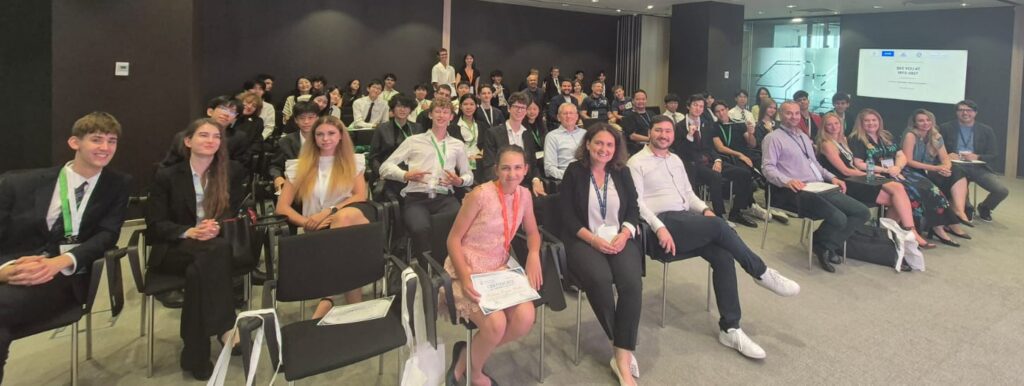
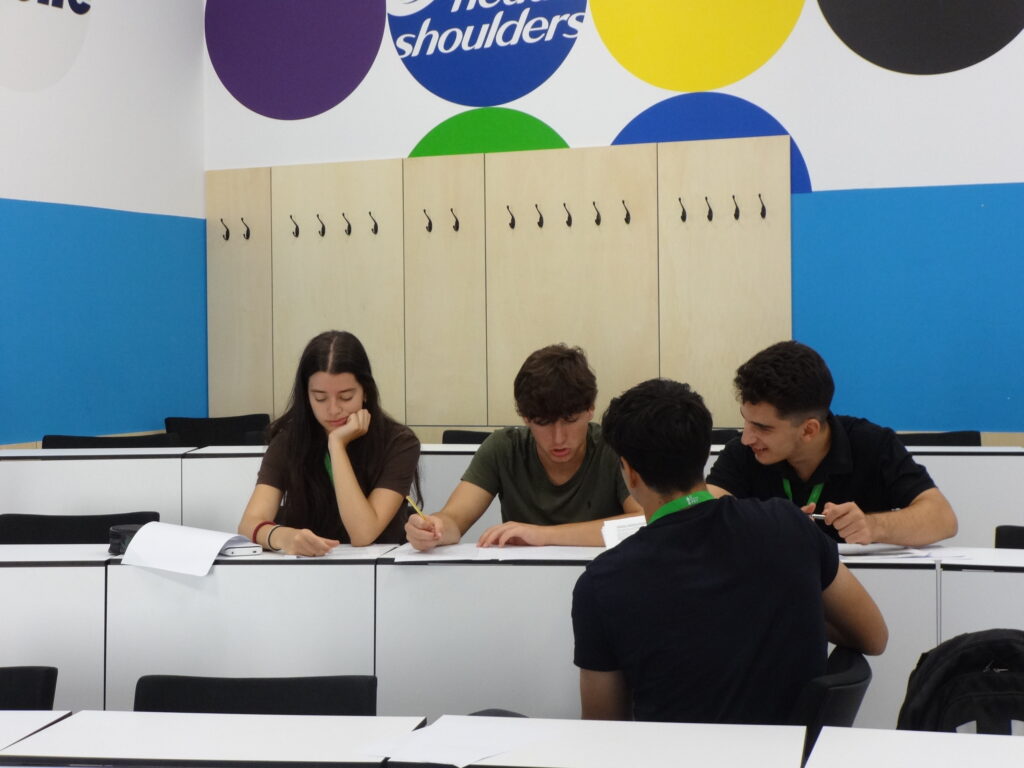
The Core Challenge: Case Analysis and Strategic Recommendation
The Olympiad is its a real-world business solution simulation that directly mirrors the high-level, complex issues encountered by global strategic consulting firms. The competition centers on a single, intensive Case Analysis and Strategic Recommendation task. Each competing team will receive an extensive Case Study detailing the situation of a global company, or a specific division of a multinational corporation, currently grappling with significant difficulties. The core issue will inevitably stem from rapidly changing international market conditions. The comprehensive case materials provided will include (but not be limited to) historical financial statements such as Income Statement, Balance Sheet, Cash Flow, along with market research, competitor analysis, organizational structure data, and internal memos from company leadership.
The primary intellectual challenge for the student consultants is to effectively filter this voluminous information to precisely identify the root cause, moving beyond mere symptoms.
Teams must then synthesize their findings into a dual-part, high-quality professional deliverable, acting as external consultants hired to resolve the crisis.
The initial phase (Part 1) is the Financial Report, which demands the detailed calculation and analytical interpretation of a wide array of Key Performance Indicators (KPIs). This analytical foundation must span all main functional areas of corporate finance to provide a holistic view of the company's fiscal health. Students must rigorously calculate minimum categories of ratios, including Profitability Ratios (e.g., Gross Margin, ROE), Liquidity Ratios (Current Ratio, Quick Ratio), Solvency/Leverage Ratios (Debt-to-Equity, Times Interest Earned), and Activity/Efficiency Ratios (Inventory Turnover, Days Sales Outstanding). The results from these empirical calculations will directly inform the team's diagnosis of financial strengths and weaknesses, enabling the formulation of a data-driven, targeted solution.
The second and the third part (Part 2 and 3) is the Comprehensive Written Report (The Action Plan), a detailed professional document presented to the company's Board of Directors. It must contain a concise and persuasive Executive Summary, a clear, data-backed Root Cause Analysis, a detailed, innovative, and practical Strategic Recommendation (which might be a capital restructuring, a new market entry strategy, or a digital transformation initiative), a rigorous Financial Projection including a 3-year pro-forma financial statement that quantifies the expected impact on key metrics like revenue, EBITDA, and Net Present Value/ROI, and a final, actionable Implementation Roadmap detailing the step-by-step timeline, required resources, and execution KPIs.
Finally, teams present their solution via a Formal Presentation (The Pitch) to a panel of judges, acting as the Board, typically involving a structured presentation (e.g., 10 minutes) followed by an intensive Q&A session (e.g., 10 minutes) where they must persuasively defend their financial and strategic assumptions under intense pressure.
Detailed Event Agenda and Competition Format
The International Business and Finance Olympiad is meticulously structured over four high-intensity days, specifically designed to optimize both competition time and crucial networking opportunities in the host city of Bucharest, Romania.
Arrival, Registration, and Settling In, is dedicated to travel recovery, beginning with the arrival of participants and team leaders at the designated major international hub, International Otopeni Airport (OTP). Attendees are greeted by the Olympiad's welcome team, transferred to their official accommodation, complete administrative registration, and conclude the day with a formal Welcome Dinner provided
Formal Launch and Competition Commencement, marks the official start with the Official Opening Ceremony, featuring addresses from organizers and key sponsors, followed immediately by Team Introductions and the Competition Overview where the esteemed panel of judges is presented, all specific rules are outlined, and, most critically, the comprehensive case studies are formally distributed. The afternoon is dedicated entirely to the Execution of the Olympiad (Part 1, 2 and 3), as teams move into dedicated workspace sessions to initiate their rigorous analysis and strategic development. The day will end with the deadline for the final submission of all business reports and presentations.
Project presentation and celebration - beginning with the Presentation of the Business and Financial Report of the Olympiad, which encompasses the final preparation of reports, the formal presentation pitches, and the Q&A sessions. As the competitive intensity subsides, the focus shifts to the evening's prestige event, the Awards and Official Closing Ceremony, which features a gala dinner and the highly anticipated announcement of the winners and the presentation of all official awards and honors.
Departure is reserved for a smooth logistical conclusion, with participants checking out from their accommodation in the morning and being provided with organized transfers directly back to the airport for their flights home.
The Competition Format itself is segmented to test both foundational knowledge and rapid analytical skills. The Initial Phase involves the Kick-off & Case Distribution, where teams immediately begin conducting a deep financial analysis of the company’s current situation using all provided financial statements and market indicators. The competition then moves into its Interim Meeting where Team Leaders meet to discuss and collectively vote on the final two core challenges/constraints for the case (Part 2 and 3), a phase lasting no more than two hours. Immediately following this selection, teams enter the Second Preparation stage, where they have approximately three hours to refine their complete strategies based on the newly introduced challenge parameters. The process concludes with the submission of Final Deliverables: the comprehensive written report and the professional PowerPoint presentation.
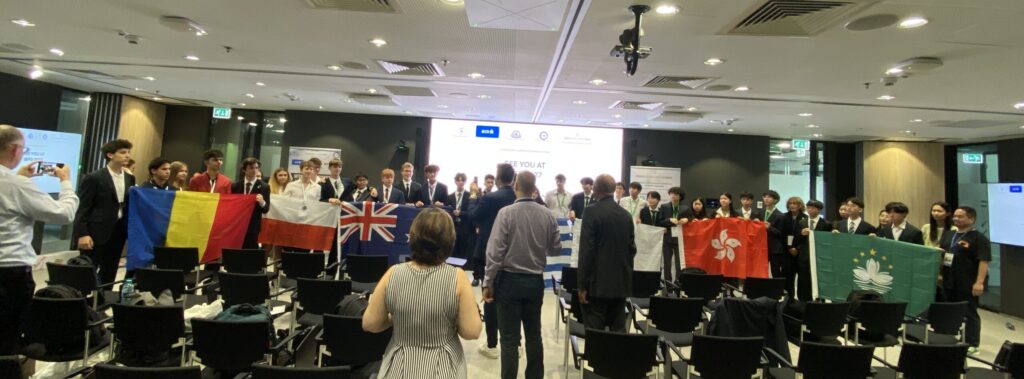
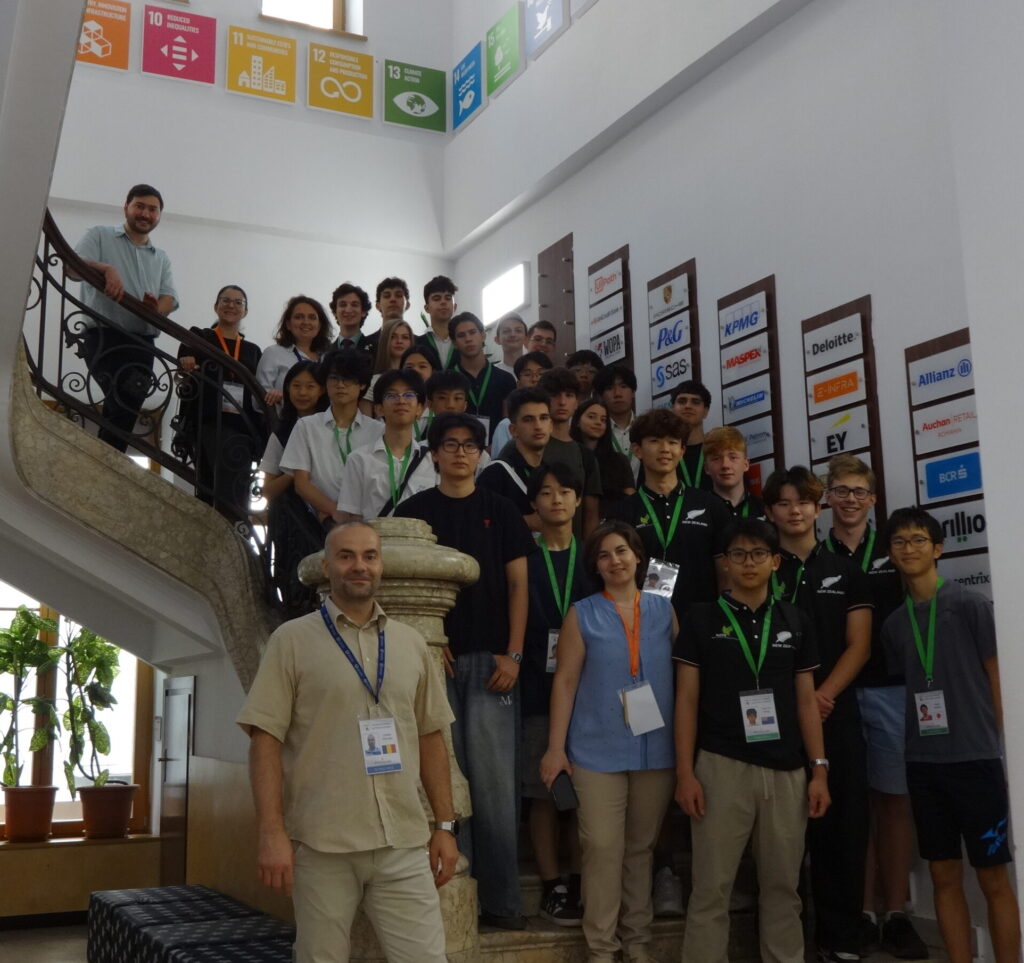
Team Leaders, Awards, and Logistics
The role of the Team Leader (Coordinating Teacher/Mentor) is absolutely crucial, providing essential support and guidance both before and during the event.
• In the Preparation Phase, the focus is on Empowerment, ensuring that team members have comprehensively mastered the syllabus and fully understand the complex, interdisciplinary topics.
• During the Event, the role is constrained; Team Leaders are strictly not allowed to provide direct answers or actively coach the teams during the execution phase of the challenge. Their involvement is limited to the Task-Oriented Role of participating in the decision-making process during the Interim Meeting when selecting the final two case challenges (Part 2 and 3).
Regarding Logistics, for the 2026 edition of the Olympiad, ASE Bucharest will generously provide accommodation to participating teams, ensuring international students and their accompanying teachers/mentors can focus entirely on the competition without the burden of logistical worries. Accommodation is arranged at the University dorms, offering convenience and comfort. The provision includes housing for up to 5 students and 1 coordinating teacher/team leader per participating country.
Crucially, this full accommodation is offered free of charge to the first 10 countries that formally register their interest in participating, ensuring equitable access and reducing the financial barrier for initial participants. Additionally, transportation will be arranged between the designated international airport, university dorms/ accommodation and the competition venue to ensure smooth and efficient transitions throughout the event.